Organ Donation: Myths & Facts
Separating myths from facts – because one informed decision can save lives.
Organ donation is a selfless act that can give someone a second chance at life. However, misconceptions, fear and lack of awareness often prevent people from considering donation. Let's understand the facts behind some common myths.

Frequently Asked Questions
1. Myth: If I agree to donate my organs, doctors may not try as hard to save my life.
Fact: Saving your life is always the first priority. The medical team treating you focuses entirely on providing the best possible care. Organ donation is considered only after death has been formally established according to prescribed medical and legal procedures. The transplant team does not influence decisions about life-saving treatment.
2. Myth: Brain death is the same as being in a coma.
Fact: No. Brain death (brain-stem death) is completely different from a coma. Brain-stem death means the permanent and irreversible loss of brain-stem function. The person is legally and medically dead, even if a ventilator temporarily maintains breathing-like movements and heartbeat. Recovery from brain-stem death is not possible.
3. Myth: Only young and healthy people can donate organs.
Fact: There is no fixed upper age limit for organ donation. The suitability of organs and tissues is assessed medically at the time of donation. Even older individuals may be able to donate certain organs or tissues.
4. Myth: Organ donation will disfigure my body and prevent an open-casket funeral.
Fact: Organ retrieval is performed by trained surgeons using surgical procedures. The body is treated with dignity and respect, and the surgical incisions are carefully closed. Organ donation generally does not prevent traditional funeral arrangements or viewing of the body.
5. Myth: My family will have to pay for organ donation.
Fact: Families are not expected to pay for the donated organs. Organ retrieval and donation are carried out through authorized medical systems without selling or purchasing organs. There is no financial compensation for donating organs.
6. Myth: Organ donation is against religious beliefs.
Fact: Many major religious traditions support organ donation as an act of compassion, charity and saving human life. However, individual interpretations may differ. People with concerns can discuss the matter with their religious or spiritual leaders.
7. Myth: If I donate one kidney, I cannot live a normal life.
Fact: A healthy person can live a normal and active life with one functioning kidney. Living kidney donors undergo extensive medical and psychological evaluation before donation and require appropriate follow-up after surgery.
8. Myth: Living liver donation means giving away my entire liver.
Fact: Living liver donation involves donating only a portion of the liver, not the entire organ. Both the donor's remaining liver and the transplanted portion have the ability to regenerate and increase in volume over time. Donor safety and careful medical assessment are essential.
9. Myth: People with diabetes, high blood pressure or other medical conditions cannot donate organs.
Fact: Having a medical condition does not automatically disqualify someone from organ donation. Eligibility depends on the specific condition, its severity, organ function and medical assessment. The transplant team determines whether particular organs or tissues are suitable.
10. Myth: Organ donation is possible only when a person dies in an accident.
Fact: Organ donation may be possible following brain-stem death in different circumstances, including certain medical emergencies and severe illnesses. Donation opportunities depend on the circumstances of death, organ function and medical suitability.
11. Myth: If I register as an organ donor, my organs will automatically be donated after my death.
Fact: Registering your intention to donate is an important first step, but it does not guarantee donation. In India, the family or legally appropriate next of kin is involved in the consent process after death. Therefore, it is important to discuss your decision with your family.
12. Myth: Doctors can sell donated organs or give them to wealthy people.
Fact: Buying and selling human organs is illegal in India. Organ allocation is managed through authorized systems and established medical criteria, including compatibility, medical urgency and waiting-list policies. Organ donation is a voluntary and altruistic act.
13. Myth: Only kidneys, liver and heart can be donated.
Fact: Several organs and tissues can be donated. These include:
Organs: Kidneys, liver, heart, lungs, pancreas and small intestine.
Tissues: Corneas, skin, bones, heart valves, tendons and blood vessels.
One deceased donor may help save or improve the lives of multiple people.
14. Myth: If I have registered as a donor, I cannot change my decision.
Fact: Organ donation is voluntary. You can change or withdraw your decision at any time. It is important to update your registration where applicable and inform your family about your decision.
15. Myth: Organ donation is possible only after brain-stem death.
Fact: Different types of donation are possible depending on the circumstances. Vital organs such as the heart, lungs, liver and kidneys are generally retrieved from appropriately identified brain-stem-dead donors. Certain tissues, such as corneas, skin and bones, may also be donated after circulatory death, subject to medical suitability and prescribed time limits.
Make the Gift of Life
Every donor can make a difference. Every conversation can save a life.
Organ donation is more than a medical procedure – it is an opportunity to give hope, restore health and save lives.
You can take the first step today:
Learn about organ and tissue donation.
Make an informed decision to become a donor.
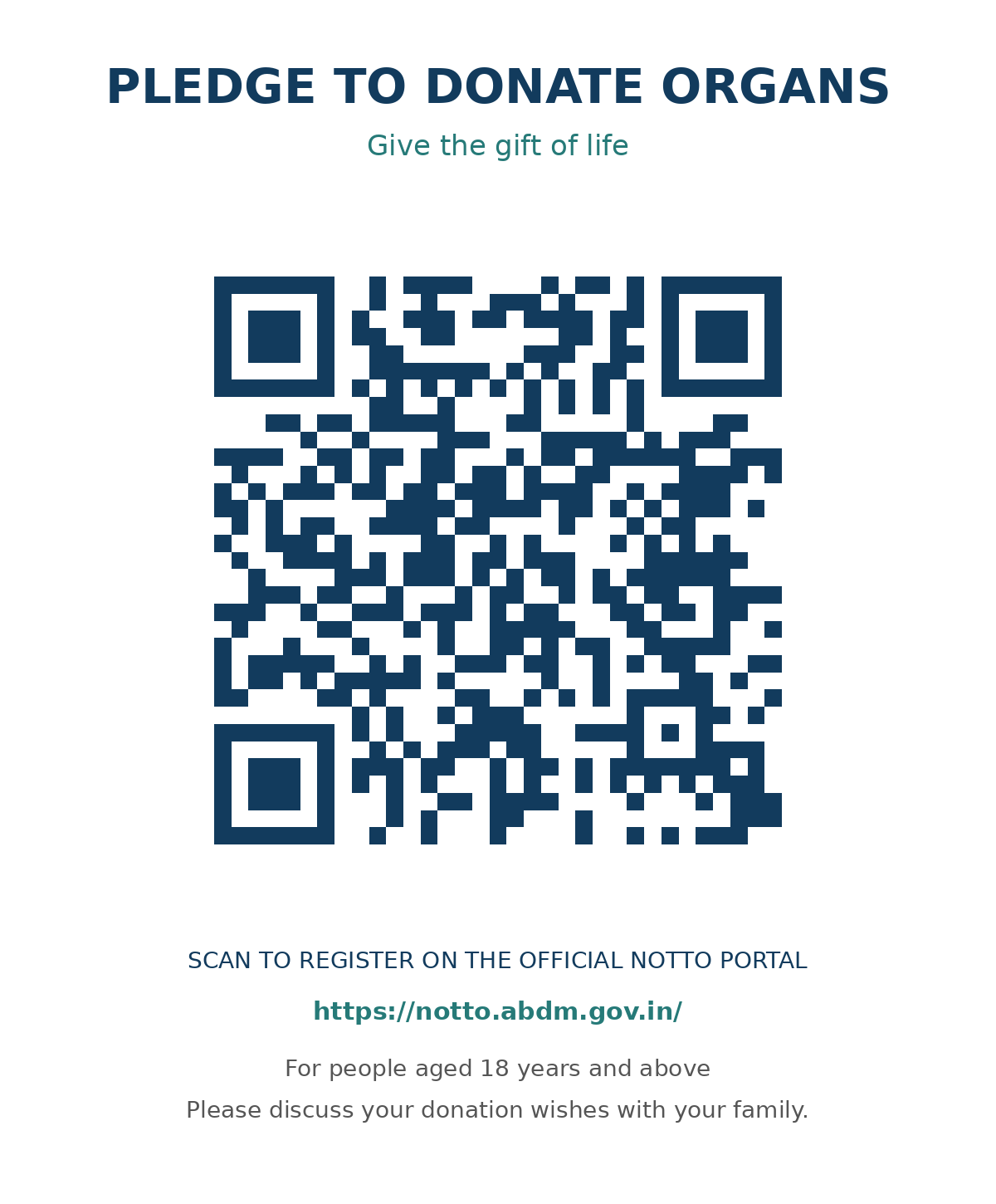
Register your pledge through the official Indian organ donation portal.
Share your decision with your family.