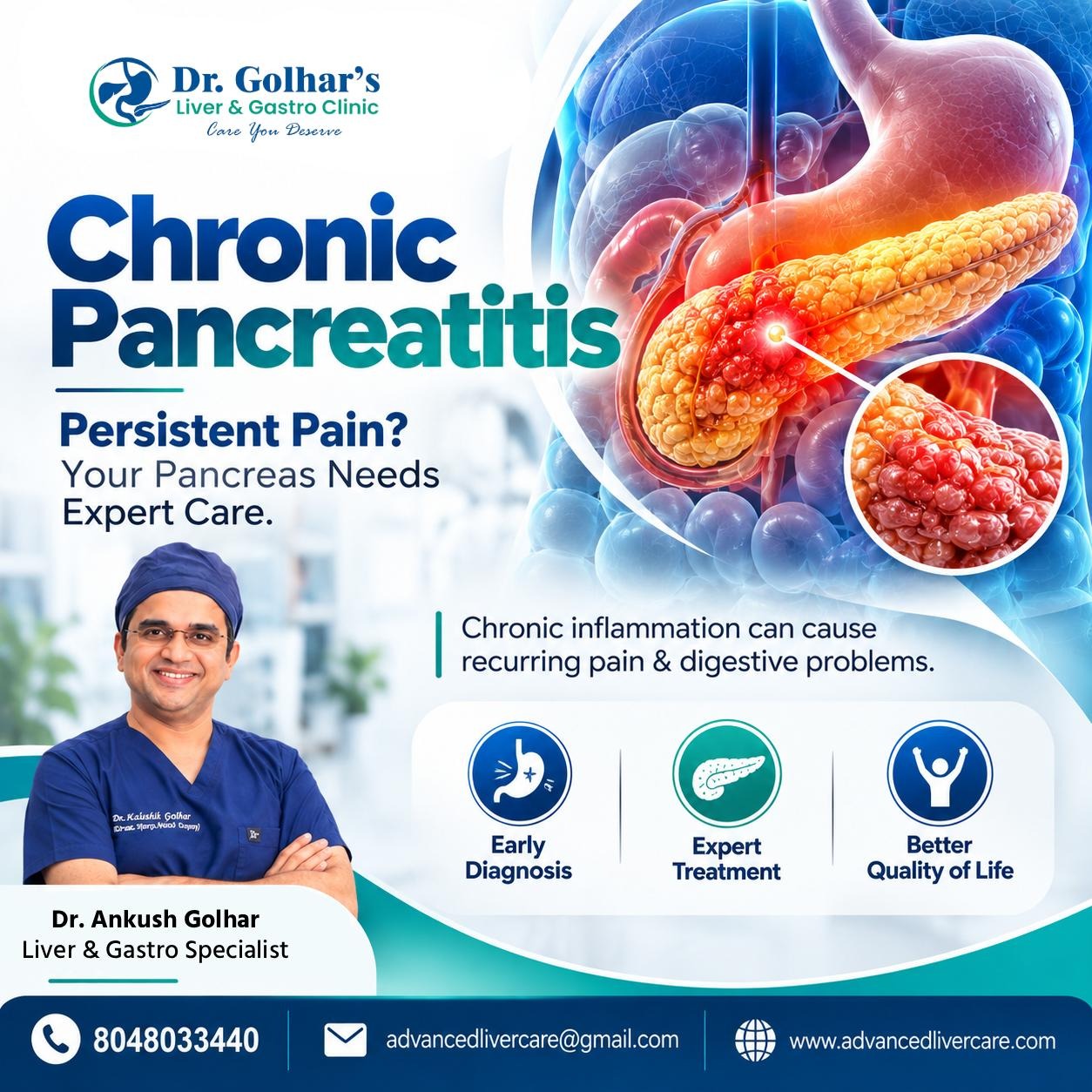
Chronic pancreatitis is a long-standing inflammatory condition of the pancreas that causes permanent damage and progressive loss of pancreatic function. Over time, it can affect the body's ability to digest food and regulate blood sugar levels.
Early diagnosis and appropriate treatment can help manage symptoms, prevent complications and improve quality of life.
Frequently Asked Questions
1. What causes chronic pancreatitis?
Common causes include:
- Long-term alcohol consumption.
- Smoking.
- Recurrent episodes of acute pancreatitis.
- Genetic or hereditary conditions.
- Autoimmune pancreatitis.
- Certain metabolic disorders.
- In some patients, the cause remains unknown.
2. What are the common symptoms?
- Recurrent or persistent upper abdominal pain, sometimes radiating to the back.
- Pain that worsens after meals.
- Nausea and vomiting.
- Unexplained weight loss.
- Fatty, foul-smelling stools due to poor digestion.
- Diabetes in advanced stages.
3. How is chronic pancreatitis diagnosed?
Diagnosis involves clinical assessment and investigations such as:
- CT scan of the abdomen.
- MRI and MRCP.
- Endoscopic ultrasound (EUS).
- Blood glucose and pancreatic function tests, where indicated.
4. What are the treatment options?
Treatment aims to relieve pain, improve digestion and manage complications.
- Lifestyle modifications: Complete avoidance of alcohol and smoking.
- Medications: Pain management and pancreatic enzyme supplements.
- Nutritional support: Balanced diet and correction of nutritional deficiencies.
- Endoscopic treatment: ERCP to manage pancreatic duct stones and strictures in selected patients.
- Surgical treatment: Considered for persistent pain, ductal obstruction and complications when other treatments are inadequate.
5. When is surgery required?
Surgery may be recommended for patients with persistent or severe pain, pancreatic duct obstruction, inflammatory masses or complications that cannot be adequately managed through medical or endoscopic treatment.
Depending on the condition, surgical options include drainage procedures, pancreatic head resection or other specialised pancreatic operations.
6. What are the possible complications?
Chronic pancreatitis can lead to:
- Pancreatic duct stones and strictures.
- Diabetes mellitus.
- Pancreatic insufficiency and malnutrition.
- Pancreatic pseudocysts.
- Bile duct or duodenal obstruction.
- Increased risk of pancreatic cancer.
7. Can chronic pancreatitis be prevented?
The risk of progression can be reduced by avoiding alcohol and tobacco, maintaining a healthy diet, managing underlying medical conditions and following regular medical advice.
When should you consult a specialist?
Persistent abdominal pain, unexplained weight loss, recurrent pancreatitis or digestive problems require evaluation by a gastroenterologist or pancreatic surgeon.
Specialised Care for Pancreatic Diseases
Early diagnosis, personalised treatment and appropriate follow-up can help improve symptom control and quality of life.
Consult a pancreatic specialist for expert evaluation and treatment.
Disclaimer: This information is intended for educational purposes and does not replace professional medical consultation.
Keywords