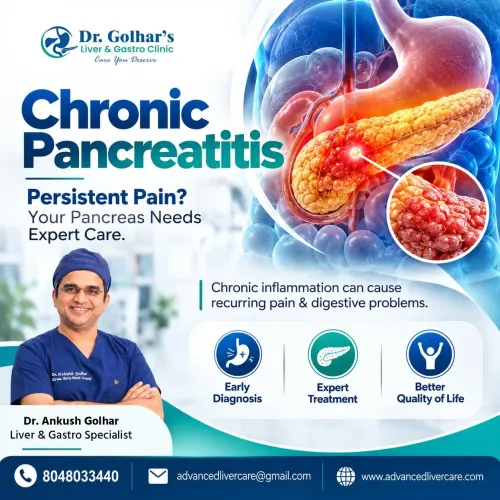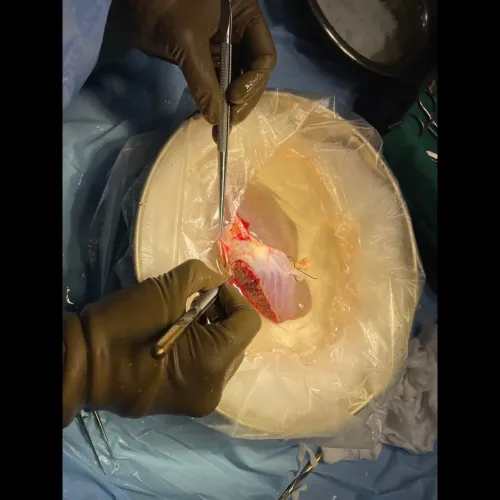
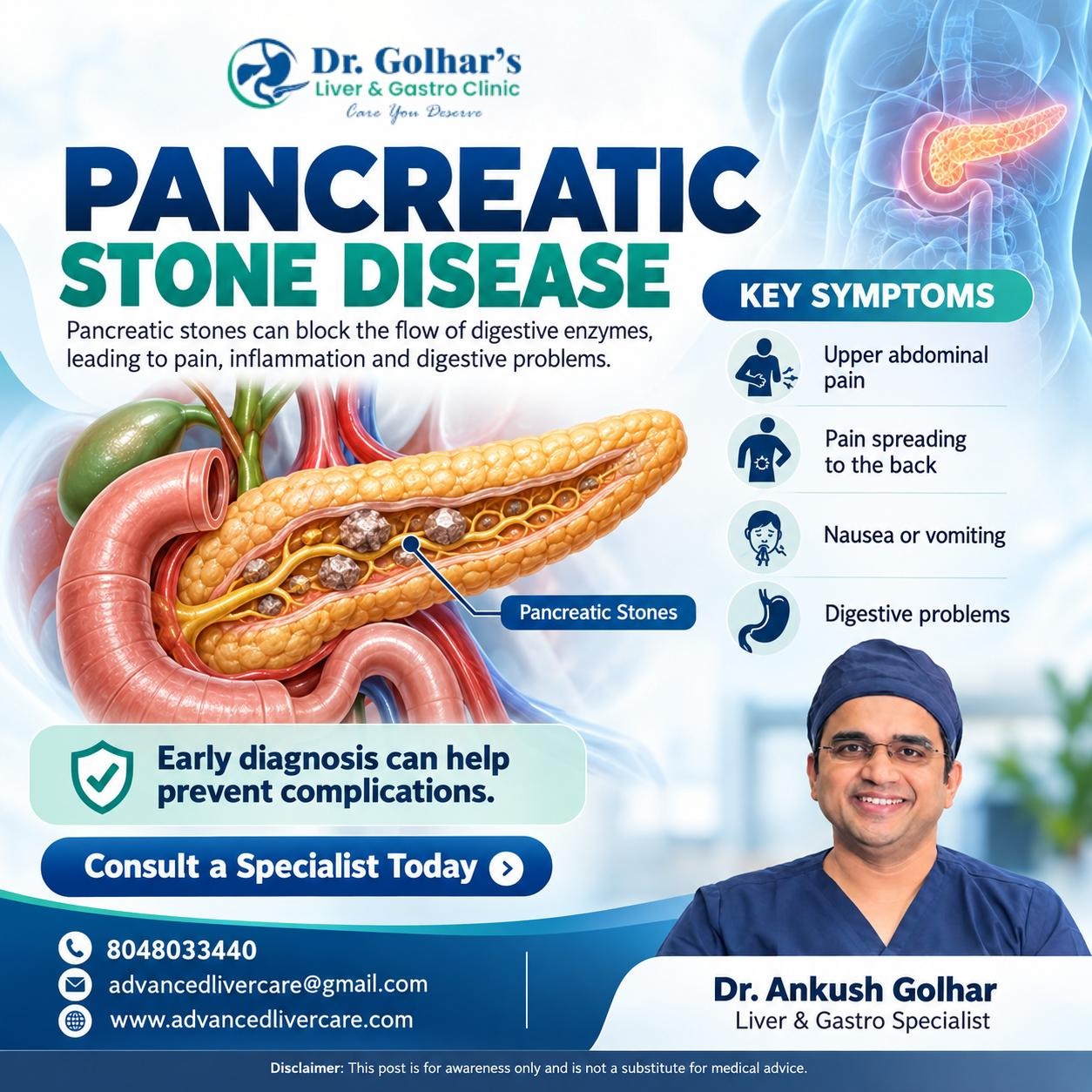
Pancreatic stone disease is a condition in which hard deposits of calcium form inside the pancreatic duct or pancreatic tissue. These stones can block the normal flow of pancreatic juices, leading to inflammation, pain and damage to the pancreas.
It is commonly associated with chronic pancreatitis, a long-standing inflammation of the pancreas.
Frequently Asked Questions
1. What causes pancreatic stones?
Pancreatic stones commonly develop due to chronic pancreatitis. Other contributing factors include:
- Long-term alcohol consumption.
- Smoking.
- Genetic and hereditary conditions.
- Recurrent episodes of pancreatitis.
- Certain metabolic disorders.
2. What are the symptoms of pancreatic stone disease?
Common symptoms include:
- Recurrent or persistent upper abdominal pain.
- Pain radiating to the back.
- Pain that worsens after meals.
- Nausea and vomiting.
- Unexplained weight loss.
- Fatty, foul-smelling stools due to poor digestion.
- Diabetes in advanced cases.
3. How is pancreatic stone disease diagnosed?
Diagnosis involves clinical evaluation and imaging investigations, such as:
- Ultrasound: May identify pancreatic duct dilatation or stones.
- CT Scan: Helps detect pancreatic calcifications and ductal changes.
- MRCP: Provides detailed images of pancreatic ducts.
- Endoscopic Ultrasound (EUS): Helps identify small stones and assess pancreatic changes.
4. What are the treatment options?
Treatment depends on the size, location and number of stones, associated duct obstruction and severity of symptoms.
- Medications: Pain management, pancreatic enzyme supplements when indicated, and nutritional support.
- ERCP: Endoscopic removal of accessible pancreatic duct stones and treatment of duct strictures.
- ESWL (Extracorporeal Shock Wave Lithotripsy): Uses shock waves to break large pancreatic duct stones into smaller fragments for easier removal.
- Surgery: Considered for large or multiple stones, persistent pain, associated ductal obstruction or failure of endoscopic treatment.
5. Is surgery necessary for every patient?
No. Many patients can be managed with medical or endoscopic treatment. Surgery is recommended when symptoms persist, complications develop or less invasive treatments are unsuccessful. In selected patients, surgery may provide more durable pain relief.
6. What happens if pancreatic stones are left untreated?
Untreated stones may cause persistent duct obstruction, recurrent pancreatitis, worsening abdominal pain, impaired digestion, nutritional deficiencies and diabetes.
7. Can pancreatic stone disease be prevented?
The risk can be reduced by:
- Avoiding alcohol.
- Stopping smoking.
- Following a balanced, nutritious diet.
- Managing underlying metabolic conditions.
- Seeking timely treatment for recurrent pancreatitis.
When should you consult a specialist?
Persistent upper abdominal pain, recurrent pancreatitis, unexplained weight loss or digestive difficulties should be evaluated by a gastroenterologist or pancreatic surgeon.
Keywords